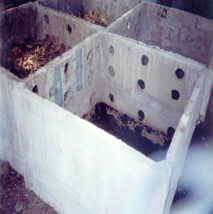
Vermicomposting is a modified and specialised method of composting – the process uses earthworms to eat and digest farm wastes and turn out a high quality compost in two months or less. Vermicompost is not a biofertiliser as is touted by some, merely an improved compost.
Vermicompost can also be used to make compost tea. Vermicompost tea is useful as a prophylactic against pests and diseases, for pest repelling and as a foliar spray. A by-product of vermicomposting called vermiwash (which can be collected if there is a tap at the base of the vermicompost tank) also serves the same purpose.
An important point to note in case of vermicomposting but widely ignored, is to carry out proper sieving of the compost before applying it in the fields. The most efficient and widely-used earthworms in vermicomposting are not indigenous and if the worms and casts find their way to the fields, they will quickly colonise and dominate the local species. Farmers can also use indigenous earthworm species, collecting them from their fields using collection baits and introducing the earthworms into heaps.
In the usual way vermicomposting is practiced in India and most other places around the world, it is both labour-intensive and requires some infrastructure. As a result, while a small farm can use this method to compost most of its wastes, a larger farm often finds it expensive and difficult to compost most of its wastes through vermicomposting. We have after some experimentation developed a methodology through which these issues are resolved – labour, time, managerial inputs, infrastructure and the usage of exotic worms.
We offer training and consultancy services on composting and vermicomposting, including enrichment techniques, low-cost methods and improved methodologies. To know more, please read the sections on consultancy and training, specialised areas of consultancy and training and production of organic inputs.